
How to Mix Furniture Styles Without Making a Room Look Random
How to Mix Furniture Styles Without Making a Room Look Random
At Obelisk Home, we believe a cohesive room does not require matching furniture. Our downtown Springfield showroom brings together furniture, lighting, original art, and home furnishings in layered settings, giving us a firsthand perspective on how different styles can work together.
So, how do you mix furniture styles without making a room look random?
A room does not need matching furniture to feel cohesive. Different furniture styles can work together when the pieces share enough visual relationships through scale, proportion, color, materials, shape, or repetition.
Maybe you have a traditional chest you want to keep but prefer a contemporary sofa. Maybe your dining table is warm wood, but the chairs you love are completely different. Or perhaps you found one great piece and aren't sure it works with what you already own.
The better question isn't simply, “Does it match?” It's, “What helps these pieces relate?”
Cohesive Does Not Have to Mean Matching
Matching furniture is one way to create consistency, but it isn't the only way. A cohesive room can include furniture from different styles, periods, and collections.
In our experience, the goal isn't to hide those differences. It's to create enough visual relationships that the room feels considered rather than random.
Think of it this way: your furniture doesn't have to match, but it does need to relate.
That distinction gives you much more freedom to keep meaningful pieces, introduce something unexpected, and build a home over time rather than feeling as though everything has to come from the same collection.
Start With the Pieces You Already Love
Before deciding what style a room should be, identify what you already know you want to keep.
That could be a sofa, inherited table, favorite chair, original artwork, rug, or even a permanent feature such as hardwood flooring. Those pieces give you a more useful starting point than trying to label your home as strictly traditional, contemporary, modern, or something else.
One recommendation we frequently make is to look at the room you actually have before shopping for what comes next. Consider what the existing pieces contribute, including their color, wood tone, scale, materials, and shape. Those characteristics can help guide your next selection.
You do not have to replace good furniture simply because your tastes have changed. Mixing old and new furniture can be part of what gives a home its personality.
Find a Common Thread Between Different Furniture Styles
The easiest way to make mismatched furniture look cohesive is to establish one or more visual relationships between the pieces.
Look for connections involving:
- Color or undertone
- Materials and finishes
- Shapes and lines
- Texture
- Scale and proportion
- Repeated details
Imagine a clean-lined upholstered sofa next to an ornate wood chest. Stylistically, they may have little in common. But the warm tone of the chest might appear again in a chair frame. A rug could contain colors that relate to both pieces. Artwork might introduce elements that complement the traditional chest and the more contemporary sofa.
Repetition is useful because it gives an isolated choice more context. Repeating a finish, color, material, or shape elsewhere in the room can help different pieces feel connected without making them identical.
We also don't recommend relying too heavily on formulas for how to mix furniture styles. A room does not need to be a prescribed percentage of traditional, modern, or contemporary furniture. How the furnishings relate to one another is more useful than assigning each piece to a category.
Scale and Proportion May Matter More Than Style
Sometimes furniture appears mismatched when style isn't actually the problem. The real issue is scale.
A delicate side table can look undersized beside a deep, visually heavy sofa. An oversized solid coffee table may overwhelm chairs with slim frames and open bases. Even pieces from the same design style can feel wrong together when their proportions compete.
Look beyond basic width and height. Consider visual weight, too.
A large upholstered chair carries more visual mass than a chair with exposed legs and an open frame. A solid cabinet feels heavier than a similarly sized console with a slender profile.
When two pieces don't seem to work together, ask whether their styles are really in conflict or whether one simply feels too large, small, heavy, or delicate for the other.
Use Contrast Intentionally
Modern and traditional furniture can work in the same room. So can antique and new furniture. A clear contrast can sometimes look more deliberate than two pieces that almost match.
Instead of disguising the difference, let each piece contribute something distinct. A streamlined sofa can give an ornate antique room to stand out, while contemporary lighting can bring a fresh counterpoint to traditional furnishings.
If an older piece feels completely isolated, look for a subtle way to reference it again through color, material, artwork, or another object. You don't need another antique that looks just like it.
Can You Mix Different Wood Tones?
Yes. Wood furniture and finishes do not have to be identical to work together.
Start by noticing the wood tones that are already prominent or difficult to change, such as flooring, cabinetry, built-ins, or a major furniture piece. Then consider whether those woods read as warmer, cooler, lighter, or darker.
An almost-match can sometimes look more accidental than an intentional contrast.
If a darker wood appears in one substantial piece, echoing a similar tone elsewhere can help it belong. Rugs, upholstery, metal, stone, and other materials can also provide visual separation so the room does not become a collection of competing wood finishes.
The goal isn't to find one exact finish and repeat it everywhere. It's to make the variation feel considered.
Let Rugs, Lighting, and Art Connect the Room
Furniture does not have to create every connection by itself. Rugs, lighting, accessories, and original art can help furnishings from different styles and periods feel like parts of the same room.
A rug can establish colors that reappear throughout the space. Lighting can repeat a shape or finish found elsewhere. Artwork can introduce color, texture, and personality while creating a visual relationship between otherwise different pieces.
We see this relationship throughout our downtown Springfield showroom, where furniture, lighting, accessories, rugs, and original art are displayed together rather than treated as separate categories.
These additional layers are often what help a room feel collected instead of coordinated by a formula.
How Do You Know When a Room Has Too Much Going On?
A mix of furniture styles starts to feel random when visual relationships disappear and too many elements compete for attention. Before removing a piece you love, identify what is actually making the room feel disconnected.
| What You Notice | What May Be Happening |
|---|---|
| Sofa and chairs feel unrelated | Scale or visual weight may be inconsistent |
| Wood pieces seem mismatched | Undertones or near-matching finishes may be competing |
| The room feels chaotic | Too many pieces may be trying to become the focal point |
| Everything matches but feels flat | The room may need more contrast, texture, or variation |
| One older piece looks isolated | Nothing else may reference its color, material, or character |
| A new piece feels random | It may lack a visual connection to the rest of the room |
Before You Add One More Piece
When shopping for furniture to add to an existing room, don't ask only, “Does this match?”
Instead, consider four things:
- Does the scale work with the furniture already in the room?
- Is there a color, material, shape, or detail connecting the new piece to something you own?
- If the piece contrasts with the room, does that contrast look purposeful?
- Does it add something the room is currently missing?
These questions are useful whether you're replacing a major piece or adding a single chair or table.
If you're thinking beyond one room, our guide to furnishing an entire home without making costly design mistakes looks at how individual furniture decisions fit into a larger plan.
Frequently Asked Questions
Do coffee tables and end tables need to match?
No. They can differ in material, shape, or style. Compatible scale, repeated finishes, similar visual weight, or complementary shapes can make them feel connected without coming from the same collection.
Do dining chairs have to match each other?
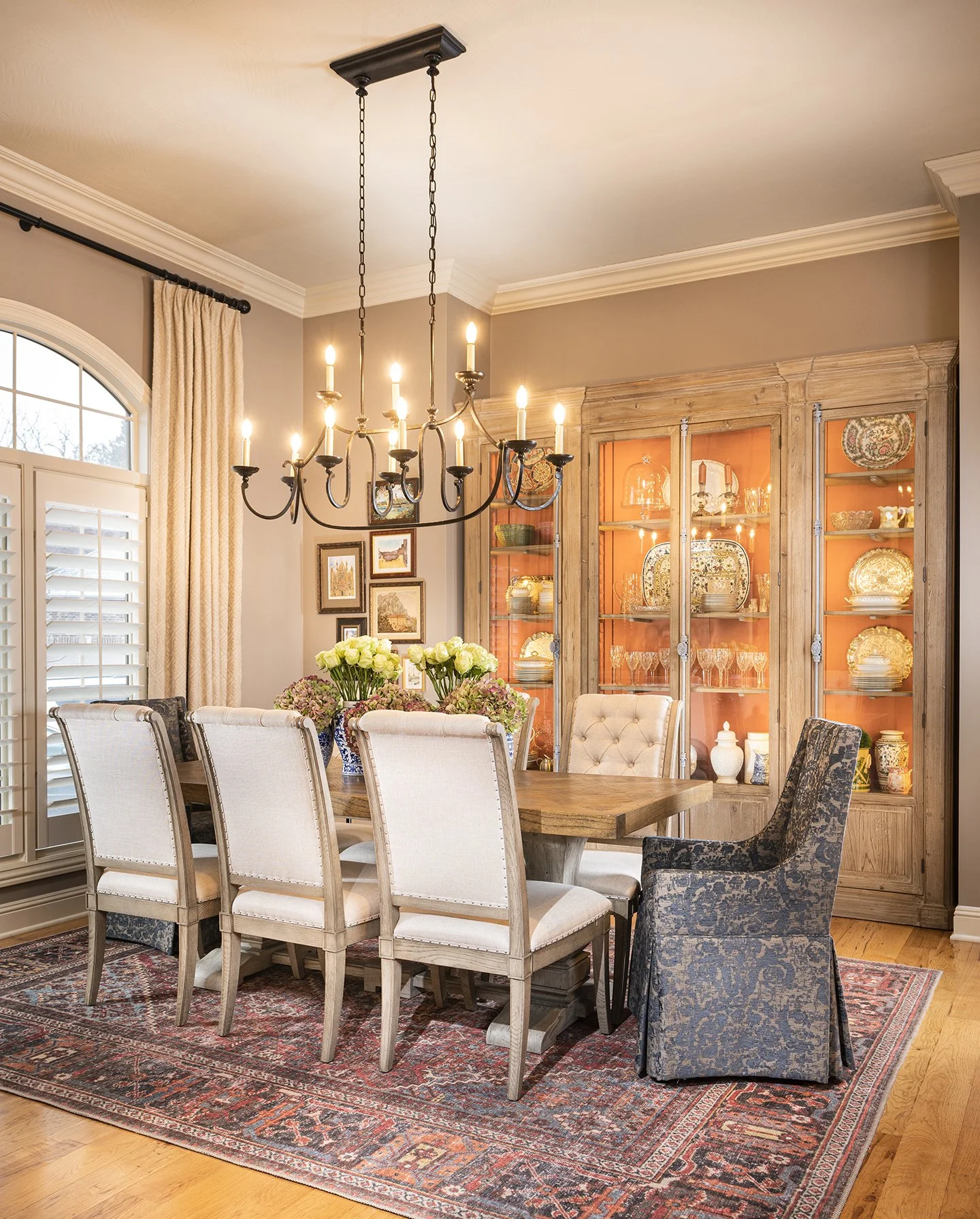
Not necessarily. Mixing dining chairs can work when there is enough consistency to make the arrangement feel considered. That might come from upholstery, color, shape, material, or repeating one chair at key positions around the table.
Should every room in a house have the same furniture style?
No. Rooms can have different personalities while still feeling connected as part of the same home. Repeating selected colors, materials, finishes, architectural details, or design ideas can provide continuity without making every room look alike.
What if I love a piece of furniture but it doesn't match anything I own?
Don't rule it out based on style alone. Compare its scale, color, material, shape, and visual weight with the room. A contrasting piece can work if another element gives it a meaningful connection to the space.
Can an interior designer work with furniture I already own?
Yes. At Obelisk Home, an interior design project does not necessarily mean starting over. Existing furniture, artwork, and other pieces can be considered alongside new selections when determining what works for the room and what may be missing.
See How Different Furniture Styles Work Together
Sometimes it is easier to judge a furniture combination when you can see different pieces together in person. At our downtown Springfield showroom, furniture is displayed in layered settings with lighting, rugs, accessories, and original art.
Stop in if you're searching for one piece to work with furniture you already own. If you're planning a larger room or home, our interior design services can also help with space planning, furniture selection, sourcing, and creating a more cohesive finished space.
